June 7, 2013

8-Fold Increase In Weight Gain Caused By Sleep Deprivation


A good night's rest could be just what you need to stay slim. Researchers at the University of Pennsylvania have uncovered direct evidence that sleep deprivation is tied to weight gain in the largest study to date of healthy individuals in a controlled laboratory setting.

It is becoming apparent that America's sleep is under siege. The number of 'short sleepers' — people who get the less than six hours per night — has steadily risen since 1975. A national health survey conducted between 2004 and 2007 found that one out of every three adults is a short sleeper. This pattern is suspected to negatively impact our energy levels and daily metabolism, potentially increasing our appetites throughout the day and leading to weight gain.

Unlike prior work that asked people to self-report their eating and sleeping habits, which is prone to bias, scientists at Penn recruited 225 adults to participate in a two-week sleep study at the Sleep and Chronobiology Laboratory at the Hospital of the University of Pennsylvania.  By monitoring these subjects in the lab, they could directly assess how sleep deprivation changed people's dietary habits.


A Late Date With The Refrigerator
People who were forced to stay up late consumed 30 percent more calories and gained about eight times the weight of individuals allowed 10-12 hours of sleep over the two-week study period.  "Although previous epidemiological studies have suggested an association between short sleep duration and weight gain/obesity, we were surprised to observe significant weight gain during an in-laboratory study," said lead author Andrea Spaeth, a doctoral candidate in the psychology department at the University of Pennsylvania.

All of the volunteers were provided three meals day at set times, which they picked from a broad collection of menus, but they were also allowed to snack as much as they wanted during the day and night. Subjects who stayed up late ate more snacks, especially on the initial days when bedtime was delayed. Most of this snacking was done during the twilight hours of 10 p.m. to 4 a.m. and consisted of a higher percentage of fatty foods.

Participants were either Caucasian or African American, and interestingly, the latter put on more pounds when sleep deprived. "African Americans, who are at greater risk for obesity and more likely to be habitual short sleepers, may be more susceptible to weight gain in response to sleep restriction," continued Spaeth. "Future studies should focus on identifying the behavioral and physiological mechanisms underlying this increased vulnerability."  Sleep-deprived males in both racial groups gained about twice the pounds as sleep-deprived women.

Last week, the American Medical Association classified obesity as a disease, which should reinvigorate efforts to curb the exorbitant levels of the disorder recorded in the U.S.

Rectifying sleep disorders may offer a simple option for reducing obesity. Sleep apnea, which leads to interruptions in breathing, has been tied to obesity, as the restless nights caused by the condition have been linked to having less energy for exercise and daily activities. In turn, extra pounds can bulk up the muscles and tissues in one's airways, possibly establishing a vicious cycle.

Source: http://health.yahoo.net/articles/sleep/sleeping-stay-slim-8-fold-increase-weight-gain-caused-sleep-deprivation

May 3, 2013

Artificial Sweeteners May Damage Diet Efforts


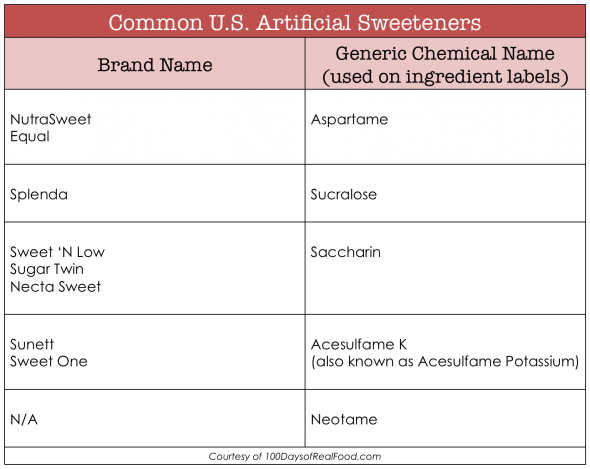
Sugar substitutes may offer sweet treats for calorie-conscious dieters, but a new study shows that they may also play tricks on the body and sabotage weight-loss efforts.  Researchers say artificial sweeteners may interfere with the body's natural ability to count calories based on a food's sweetness and make people prone to overindulging in other sweet foods and beverages.

For example, drinking a diet soft drink rather than a sugary one at lunch may reduce the calorie count of the meal, but it may trick the body into thinking that other sweet items don't have as many calories either. Researchers say the findings show that losing the ability to judge a food's calorie content based on its sweetness may be contributing to the dramatic rise in overweight and obesity rates in the U.S.  But don't ditch your diet drink yet.

"The message is not to give up your diet soda and go drink a regular soda," says researcher Susan Swithers, PhD, associate professor of psychological sciences at Purdue University. "But when you do drink beverages you probably need to pay a little more attention to whether they have calories or not and what the consequences of that fact will be on the rest of your diet."

Sweetness Provides Calorie-Counting Clues
Swithers says that in the past, a food's sweetness provided valuable clues about its caloric content, and something sweet was usually a good source of energy.  "Before things like artificial sweeteners, these relationships would be very reliable," says Swithers. "Animals needed to find good sources of calories and needed to know whether eating something provided them with lots of calories." "It's only been relatively recently that foods have been introduced that violate those kind of relationships, such as something very  sweet that has no calories," Swithers tells WebMD.

According to researchers, the number of Americans who consume sugar-free, artificially sweetened products has grown from less than 70 million in 1987 to more than 160 million in 2000.  At the same time that more people are drinking and eating foods sweetened with low-calorie sweeteners, such as aspartame and saccharin, they're not getting any thinner. In contrast, more people are becoming overweight or obese.

That prompted researchers to test whether not being able to use sensory clues to predict the calorie content of foods might contribute to overeating and weight gain.


Artificial Sweeteners May Trick the Brain
In the study, published in the July issue of the International Journal of Obesity, two groups of rats were fed either a mix of high-calorie, sugar-sweetened, and low-calorie, artificially sweetened liquids; or sugar-sweetened liquids alone. This was fed to the rats in addition their regular diet. After 10 days, they were offered a high-calorie, chocolate-flavored snack.  The study showed that rats fed the mixed liquids ate more of their regular chow after the sweet snack than those who had been fed sugar-sweetened liquids alone.

Researchers say the results show that the experience of drinking artificially sweetened, low-calorie liquids had damaged the rats' natural ability to compensate for the calories in the snack.

Manipulating Food Can Derail Diets
Health psychologist Daniel C. Stettner, PhD, says damaging the body's natural ability to count calories based on food's sweetness is just one way in which food can be manipulated to change eating habits and contribute to obesity. "We do more to manipulate food than just add artificial sweeteners. The food industry plays with the sugar, the fat, and the salt," Stettner tells WebMD. "It's like a shell game."

Stettner says that when manufacturers lower the sugar content in foods, they typically increase the fat or the salt content to compensate for any change in how it tastes or feels in the mouth. For example, sugar-free ice
creams can be made higher in fat content.  "Sugar-free foods can still be calorie-dense, and that can mess
up weight," says Stettner, who specializes in weight issues at Northpointe Health Center in Berkley, Mich.

Stettner says the body's natural calorie counter and sense of balance is also affected by genetics, environment, marketing, and physical activity level, which were not taken into account by this study.  "So many factors contribute to obesity," says Stettner. Although artificial sweeteners may alter the eating behavior of rats, he says the same principle may not necessarily apply to humans.

Susan Swithers, PhD, adds that many types of learning processes translate from rats to humans, but she acknowledges that the loss of the ability to judge the calorie content of sweet foods is probably just one of the contributors to the rise in overweight and obesity.  However, she says humans also have a distinct advantage over rats when it comes to controlling how many calories they put into their body.

"Rats can't read the labels, but we can," says Swithers. "We have to take that extra step of reading the labels or asking how many calories are in there. That may be enough so that we can compensate for those sweet
calories."

Source: http://www.webmd.com/diet/news/20040630/artificial-sweeteners-damage-diet-efforts